


Where New Zealand law leaves the player
The Gambling Act 2003 prohibits running online casino gambling from inside New Zealand, apart from the authorised domestic providers. It does not prohibit a person in New Zealand from gambling on a website based overseas. That is why the real-money casinos Kiwis use are operated offshore and hold licences from foreign jurisdictions. See also: how to pick the best live casino online.
The Department of Internal Affairs administers the Act. It does not supervise offshore operators, which has a practical consequence: if a casino abroad delays or refuses a payout, there is no local regulator to rule on your case. You rely on the operator's terms, its licensing authority and your own bank or payment provider.
The rules are being rewritten, with New Zealand moving towards a licensing system for online casino operators. The details and dates are still shifting, so we keep them on one page that is updated as they change: New Zealand online casino law.
Two other points people ask about. You must be an adult to hold an account, and every reputable operator checks age and identity. And for recreational players, gambling winnings are generally not treated as taxable income in New Zealand; anyone who gambles as a business or is unsure of their position should check with Inland Revenue or an accountant.
Real money versus demo play: what actually changes
Most online pokies and many table games can be opened in demo mode, where the balance is play credit. The maths of the game is the same in both modes. A reputable provider's pokie uses the same random number generator and the same return-to-player setting whether the credits are real or not. What changes is everything else.
| Demo mode | Real money | |
|---|---|---|
| Balance | Play credits, reset on reload | Your own NZD |
| Account needed | Often not | Yes, with verified identity before withdrawal |
| Wins | Cannot be withdrawn | Paid out, subject to terms |
| Live dealer games | Usually unavailable | Available |
| Progressive jackpots | Usually unavailable or simulated | Available |
| Bonuses | Not applicable | Available, with wagering conditions |
| What you learn | Rules, features, pace | How the cashier, limits and payouts work as well |
Demo play is the right place to learn a game's rules and get a feel for how often it pays. It cannot show you how the casino behaves when money is involved. For more on its limits, see our page on what demo mode can and cannot show.
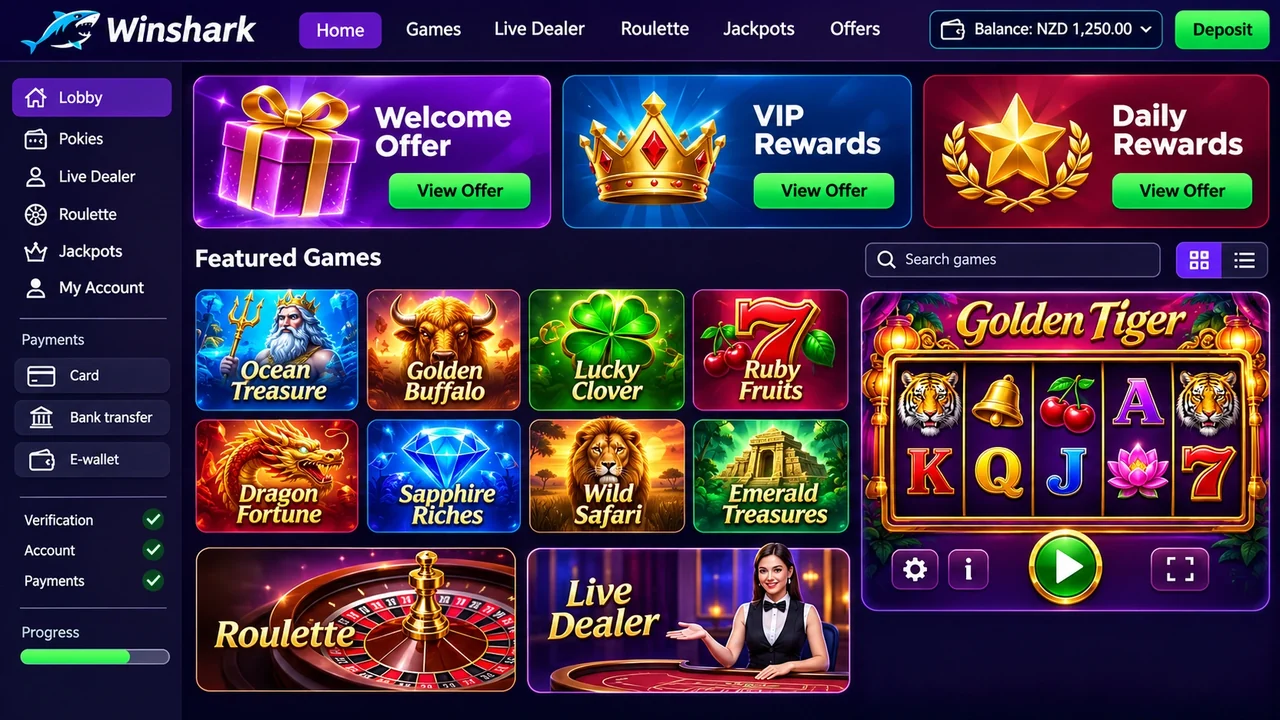
Getting money in: from sign-up to first bet
The route is the same at almost every site, and each step is a place where a small mistake causes a problem later.
- Register with accurate details. Your legal name, date of birth and current address, exactly as they appear on your ID. These are checked before any withdrawal.
- Choose NZD as the account currency if it is offered. It avoids conversion on every payment and usually cannot be changed afterwards.
- Decide about the welcome bonus. It is optional. Accepting it ties your deposit to wagering conditions; declining it keeps your balance as plain cash.
- Pick a payment method in your own name. Debit card, bank transfer, e-wallet, prepaid voucher and crypto are the usual choices, with POLi at some cashiers. Check the minimum for that method.
- Confirm the deposit and note the reference. Card and wallet deposits normally show within seconds. Bank transfers can take a day or more.
- Upload identity documents early. Photo ID, proof of address and proof of the payment method. Doing this before you need a payout removes the most common cause of delay.
If the deposit is declined, read the message before trying again. NZ banks sometimes block gambling merchants or offshore transactions, and repeated attempts can freeze a card. Our pages on declined deposits and duplicate debits and holds explain what each outcome means and when a pending charge will drop off. The full list of routes is in the payments section.
Online casino games for real money: what each one does with your stake
Every casino game has a built-in margin for the house. It is published, either as a return-to-player percentage (RTP) or as a house edge, and it is the most useful number for understanding what real-money play costs.
| Game | How it is decided | Margin, as generally published | Pace |
|---|---|---|---|
| Pokies (online slots) | Random number generator; outcome fixed the moment you spin | RTP varies by game and is shown in the info screen; many titles sit in the mid-90s percent | Fast; hundreds of spins an hour |
| European roulette (single zero) | Wheel or RNG | House edge of 2.7% | Moderate |
| American roulette (double zero) | Wheel or RNG | House edge of 5.26% | Moderate |
| Blackjack | Cards plus your decisions | Often under 1% with correct basic strategy, depending on table rules; higher with mistakes | Moderate |
| Baccarat | Fixed drawing rules | A little over 1% on Banker and Player bets; far higher on Tie | Moderate |
| Live dealer games | Real dealer on video, physical equipment | Same as the underlying game | Slower; set by the dealer |
Two cautions. An RTP figure is a long-run average over millions of rounds, not a forecast for your evening; in a single session the result can sit far from it in either direction. And some pokies are released in several RTP versions, with the casino choosing which to run, so check the figure in the game's own information screen instead of relying on a number quoted elsewhere.
Live dealer tables
Live games stream a real dealer and physical cards or a physical wheel from a studio, and you place bets through an on-screen layout. The odds are those of the underlying game, but two things differ from the software versions. Minimum bets are higher, because a staffed table costs more to run, and the pace is slower, which reduces the number of rounds you pay the margin on in an hour. Betting windows close on a timer, so a weak connection can cost you a round; check your signal before sitting down at a table with real stakes.
Our games section covers the mechanics in detail: RTP, volatility, roulette, blackjack and baccarat.
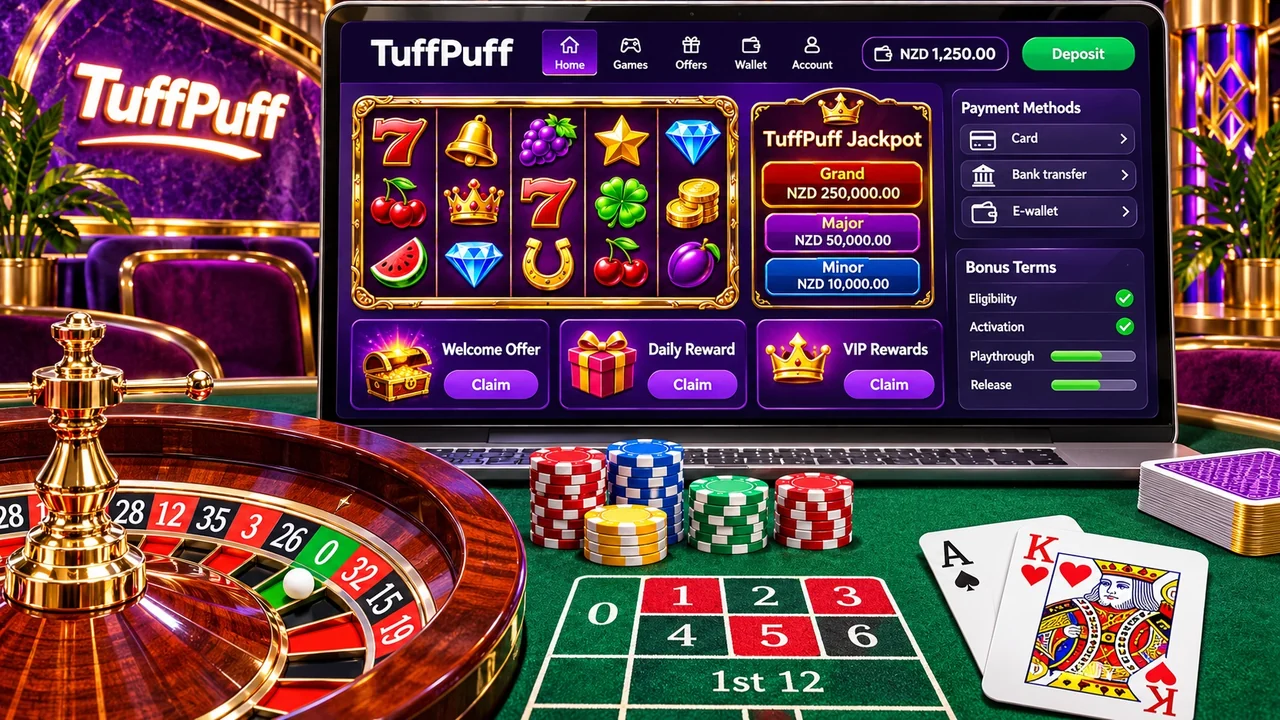
What a real-money session costs: a worked example
The cost of play is driven by three things: the margin, the stake and the number of rounds. The example below uses chosen figures to show the arithmetic. It is not a prediction.
Take a pokie with a 96% RTP. The house margin is 4%. You bet $1 a spin and play 300 spins, which is roughly half an hour at an unhurried pace.
- Total staked: 300 × $1 = $300.
- Expected long-run cost: 4% of $300 = $12.
- What you might actually see: anything from the whole balance gone to a healthy profit, because 300 spins is a tiny sample.
Notice that you can stake $300 from a $50 deposit, because wins are recycled into further bets. The expected cost is calculated on the total staked, not on the deposit. That is why a fast game with a modest margin can cost more per hour than a slow game with a bigger one.
Compare with single-zero roulette at $5 a spin and 40 spins an hour. Total staked is $200, the edge is 2.7%, and the expected cost is $5.40 for the hour. The stake per round is five times higher, yet the hourly cost is less than half, simply because fewer rounds are played.
The useful conclusion is not that one game is better. It is that real-money play has a price, the price can be estimated, and you can decide in advance what you are willing to pay for an evening's entertainment.
Welcome bonuses: more play, more conditions
Almost every real-money casino greets a new account with an offer, most often a percentage match on the first deposit, a batch of free spins, or both. A bonus gives you a bigger balance to play with. It also changes the status of your money, and that is the part to understand before ticking the box.
While a bonus is active, some or all of your balance is bonus funds. Bonus funds cannot be withdrawn until a wagering requirement is met, which means betting a multiple of the bonus, or of the bonus plus deposit, on eligible games. Along the way there are usually a maximum bet per spin, a list of excluded or reduced-weight games, and a deadline. Break one of the rules and the casino can remove the bonus and what it won.
The arithmetic, as an example
These figures are chosen for illustration and are not any operator's terms. You deposit $50 and accept a 100% match, so you start with $100. The wagering is 35 times the bonus: $50 × 35 = $1,750 in bets. On a 96% RTP pokie, the expected cost of $1,750 in bets is about $70, which is more than the $50 bonus was worth. On average, then, the bonus buys extra playing time rather than extra money, although volatility means some players do finish ahead.
Neither choice is wrong. If you want a longer session for the same deposit and are relaxed about when you can withdraw, a bonus does that. If you want to be able to cash out the moment you are ahead, play without one. What does not work is accepting a bonus without reading the terms and finding out about them at the withdrawal screen.
Phone or desktop makes no difference to the rules
Most Kiwi players use a phone, either through the mobile site or an app. The games, the cashier, the bonus terms and the verification steps are the same as on a computer. The one practical difference is that small screens hide details: the maximum bet warning, the bonus opt-in box and the currency selector are all easier to miss. Slow down at the cashier screen, wherever you are playing.
Getting money out
A real-money casino is only as good as its withdrawals. The process has more conditions than depositing, and they are worth knowing before you play.
- Verification first. A first withdrawal is not released until identity documents are approved. See payment verification.
- Back to the same method. Casinos generally pay to the method you deposited with, up to the deposited amount. Deposit-only methods such as POLi and vouchers mean a bank account has to be added and verified.
- Minimums, maximums and fees. There is a minimum withdrawal, usually higher than the minimum deposit, and often a weekly or monthly cap. Details: fees and limits.
- Bonus conditions. If a bonus is active, its wagering must be finished before bonus funds become withdrawable.
- Two waiting periods. The casino's own approval time, then the payment rail. E-wallets tend to be quickest after approval; cards and bank transfers take business days. Our comparison of bank transfer and e-wallet routes shows the difference.
If the account is in a currency other than NZD, the payout is converted on arrival and your bank's margin applies; NZD currency conversion explains how to spot it on a statement.
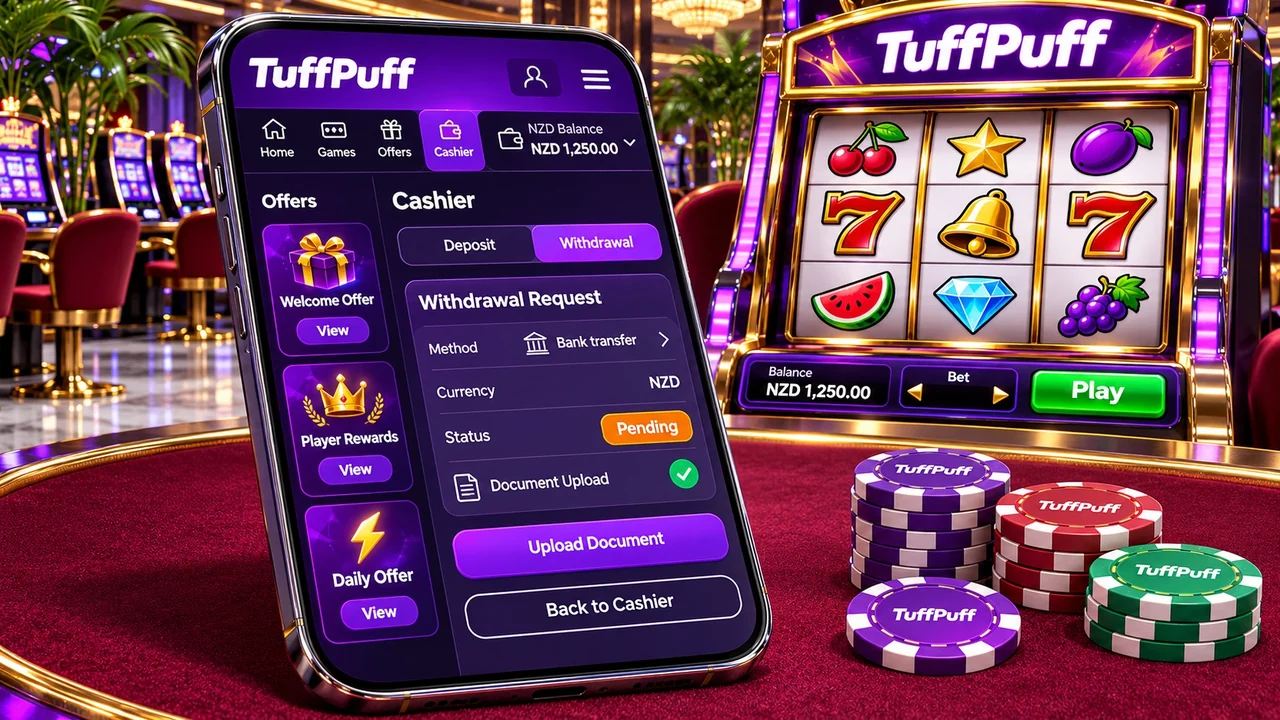
What goes wrong at a casino online with real money, and the first thing to do
Most payment problems fall into a handful of patterns. Each has a sensible first move.
| What you see | Likely cause | First step |
|---|---|---|
| Deposit declined | Bank blocking a gambling or overseas merchant | Stop retrying; contact the bank or use another method |
| Money left the bank, casino balance unchanged | Authorisation hold or unallocated transfer | Wait for the pending item to clear, then send support the reference |
| Charged twice | A repeated attempt, or a hold shown alongside the final charge | Check whether one is pending; if both settle, request a refund in writing |
| Withdrawal stuck at pending | Verification outstanding or manual approval queue | Check email and the documents tab, then ask support for the stage |
| Withdrawal rejected | Unfinished wagering, name mismatch or method cannot receive funds | Ask for the specific term relied on |
| Cashier unavailable or account under review | Processor outage or security check | Do not open a second account; wait and document |
The common thread is evidence. Keep the deposit reference, screenshots of the terms and every chat transcript. With those, a dispute has something to stand on. We go through each case separately: pending withdrawals, tracing a payment reference, outages and account reviews and refunds and disputes.
Checks worth ten minutes before you play online casino games for money
You can judge most of a casino's quality from pages that are public before you register.
- Licence. The footer should name the licensing authority and a licence number that can be looked up on that authority's own website.
- Banking page. Clear minimums, maximums, fees and processing times for each method, with NZD listed.
- Terms. Find the withdrawal limits, the dormant-account clause and the bonus rules. Vague or contradictory terms are a warning.
- Game providers. Recognised studios publish RTP and have their games independently tested.
- Support. Ask live chat a plain question about withdrawal times. Note how quickly and how precisely it is answered.
- Your own tools. Look for deposit limits and session reminders in the account settings and set them before the first deposit.
Then start small. A modest first deposit and an early test withdrawal tell you more about a site than any amount of reading. If the test payout arrives as described, you have learned the route while little was at stake.
Finally, decide your budget before the session, not during it. Real-money play is paid entertainment with a known average cost, and the players who enjoy it most are those who set the amount in advance and treat any win as a bonus. Gambling is for adults aged 18 and over; play within what you can afford to lose.
Real-money online casinos in NZ: your questions
Is it legal to play at an online casino for real money in New Zealand?
It is not an offence under the Gambling Act 2003 for a person in New Zealand to gamble on an overseas-based website. Operating an online casino from within New Zealand is restricted, which is why the sites Kiwis use are based offshore. The framework is under reform, so check current guidance.
Can I play in New Zealand dollars?
Many offshore casinos offer NZD accounts. If the one you choose does not, deposits and withdrawals are converted and your bank's foreign currency margin applies each way. Select the currency carefully at registration.
How do I withdraw real-money winnings?
Request a withdrawal in the cashier, usually to the method you deposited with. The casino approves it after verifying your identity and checking any bonus conditions, then the payment rail delivers it. E-wallets are generally quickest; bank transfers and cards take business days.
Are online pokies for real money fair?
Games from established providers run on tested random number generators with a published RTP. Fair does not mean favourable: the RTP is below 100%, so the game keeps a margin over the long run. Check the RTP in the game's information screen.
What is the difference between play online casino sites and real-money ones?
Free-play or social casino sites use credits with no cash value, and wins cannot be withdrawn. Real-money casinos require a funded, verified account and pay out wins under their terms. The games may look identical, but only one involves your money.
Do I pay tax on casino winnings in NZ?
For recreational players, gambling winnings are generally not treated as income. The position can differ for someone who gambles as a business. If in doubt, ask Inland Revenue or a tax adviser.